Nikon
Western Cowgirl Photoshoot Ideas in Old Town Folsom — Nikon Z5 II + NIKKOR Z 85mm f/1.2 S
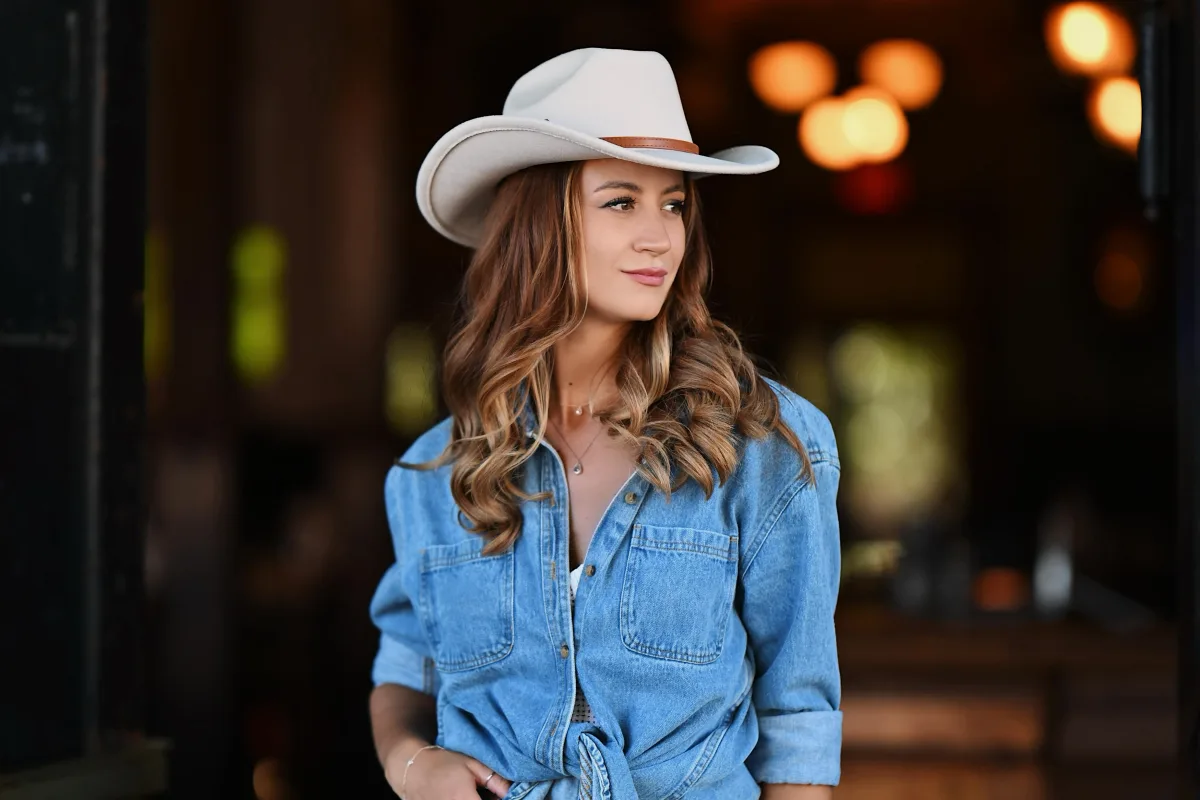
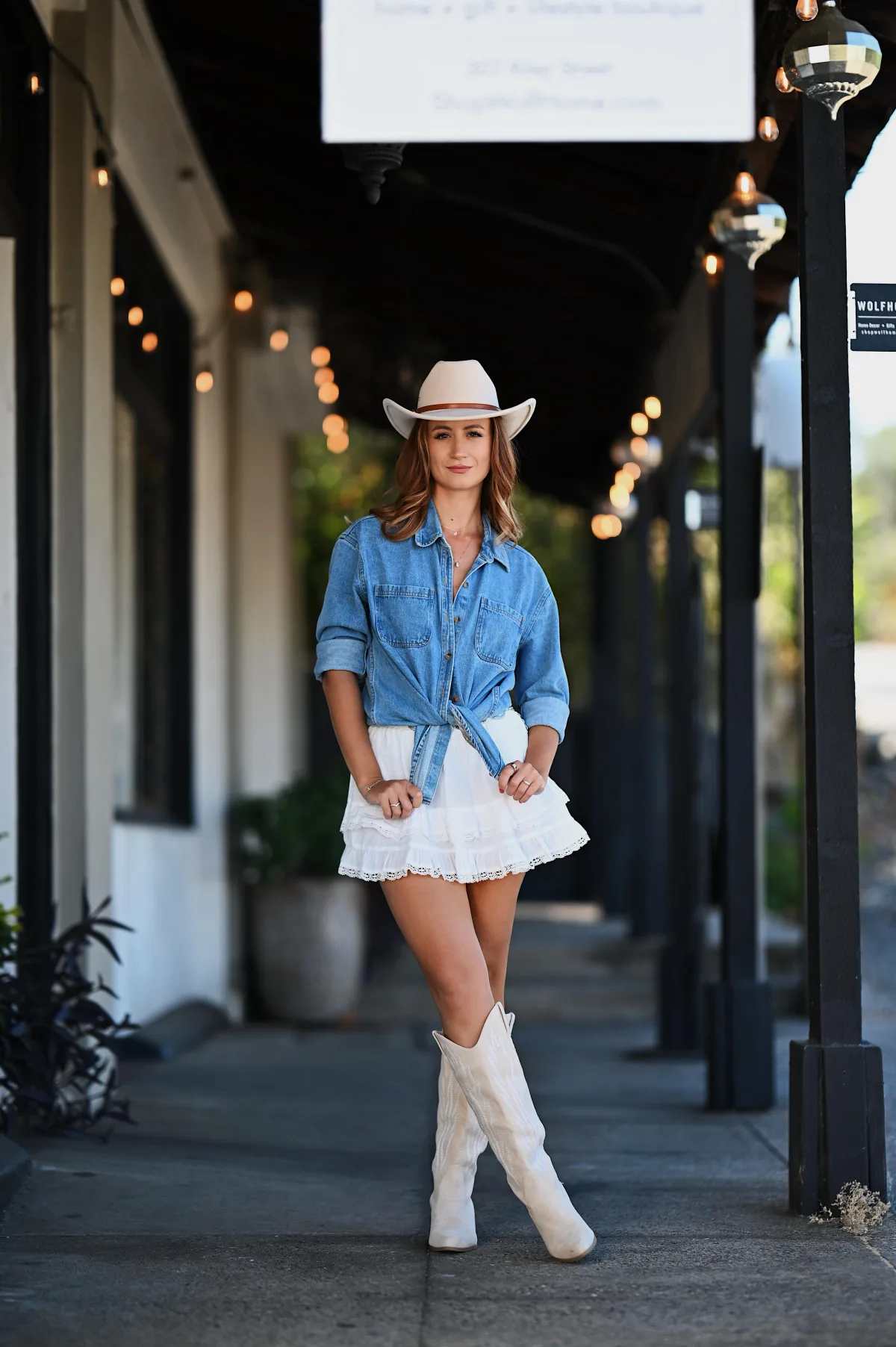
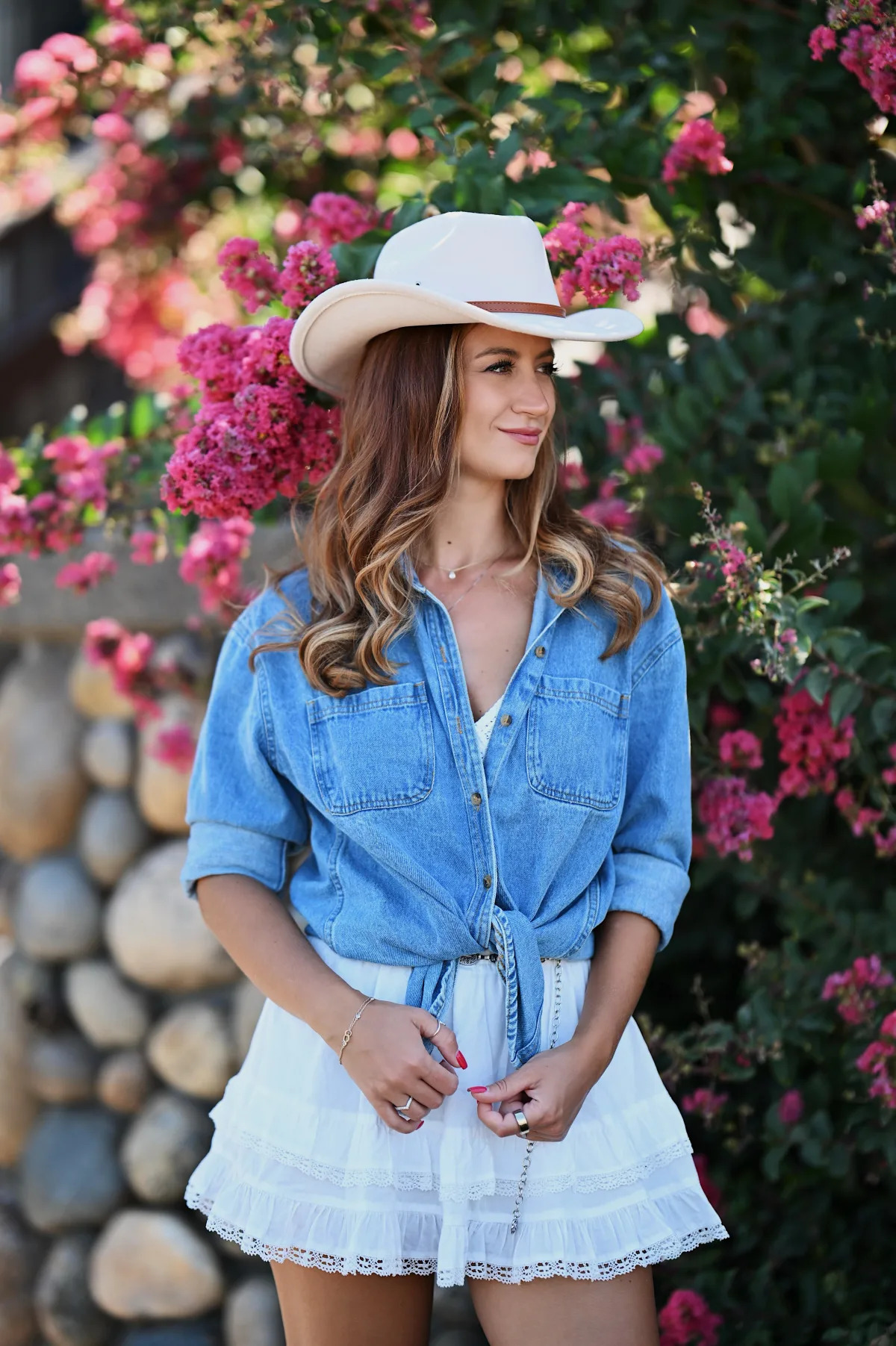
Today I was shooting with Natalia in Old Town Folsom. We collabed on a few different outfit ideas beforehand, and this Western cowgirl combo — denim, a white cowboy hat, cream boots — was the one we both kept coming back to as the best match for Old Folsom's vibe.
It's also a strong enough look that it can carry almost any background. But "can" isn't the same as "should," and this post is really about that gap. Same outfit, same model, same Nikon Z5 II and NIKKOR Z 85mm f/1.2 S, four completely different locations around town — and a walk through exactly why each one earned its spot in the shoot.
In this post, I want to walk you through how I actually choose backgrounds on location, and the reasoning behind each pick. Rather than just posting the gallery, I'm breaking down the "why" behind every location in this shoot — because that thought process is the part that actually transfers to your own photoshoot location ideas, regardless of what outfit or gear you're working with.
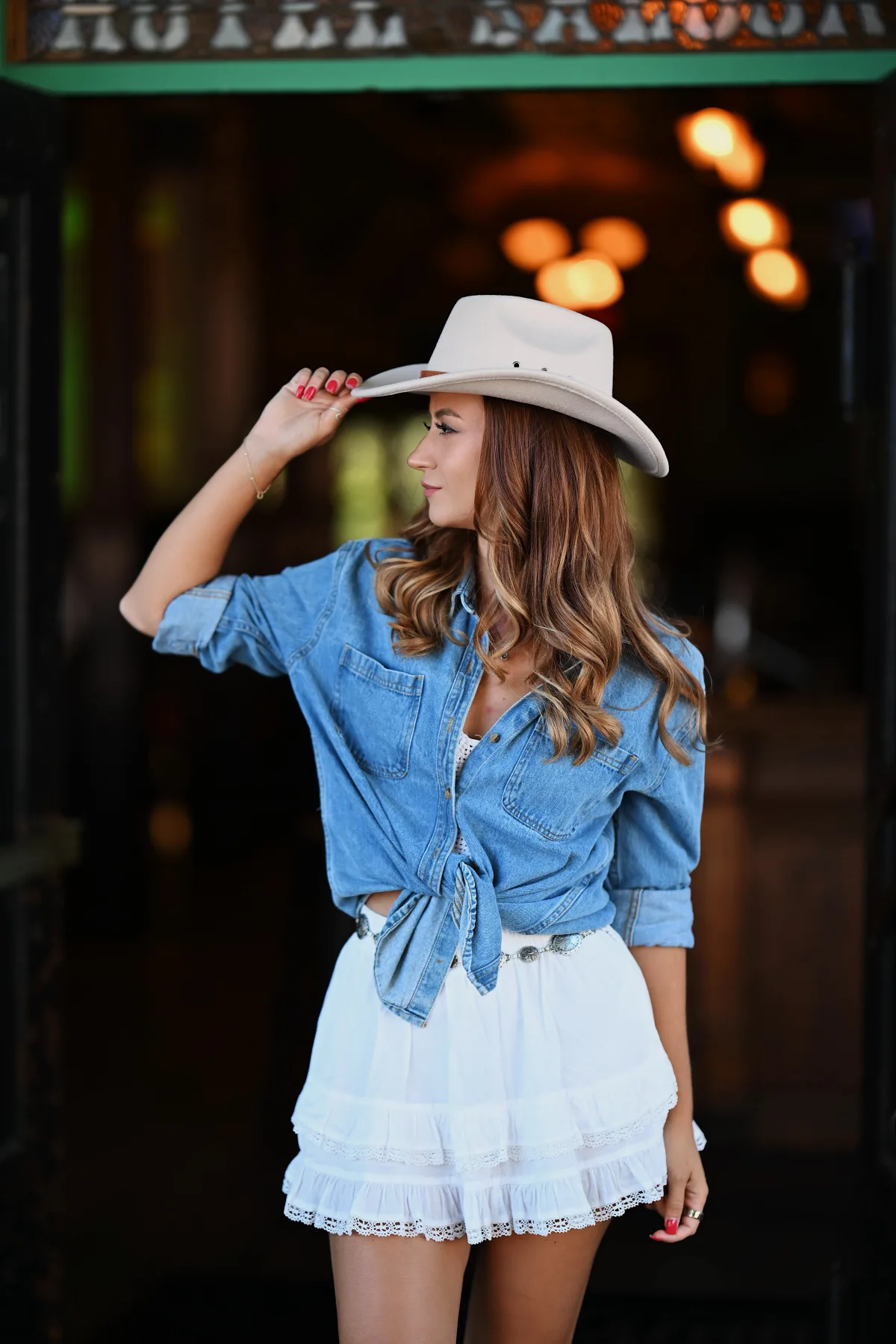
Hotel Saloon — Finding the Theme Match First
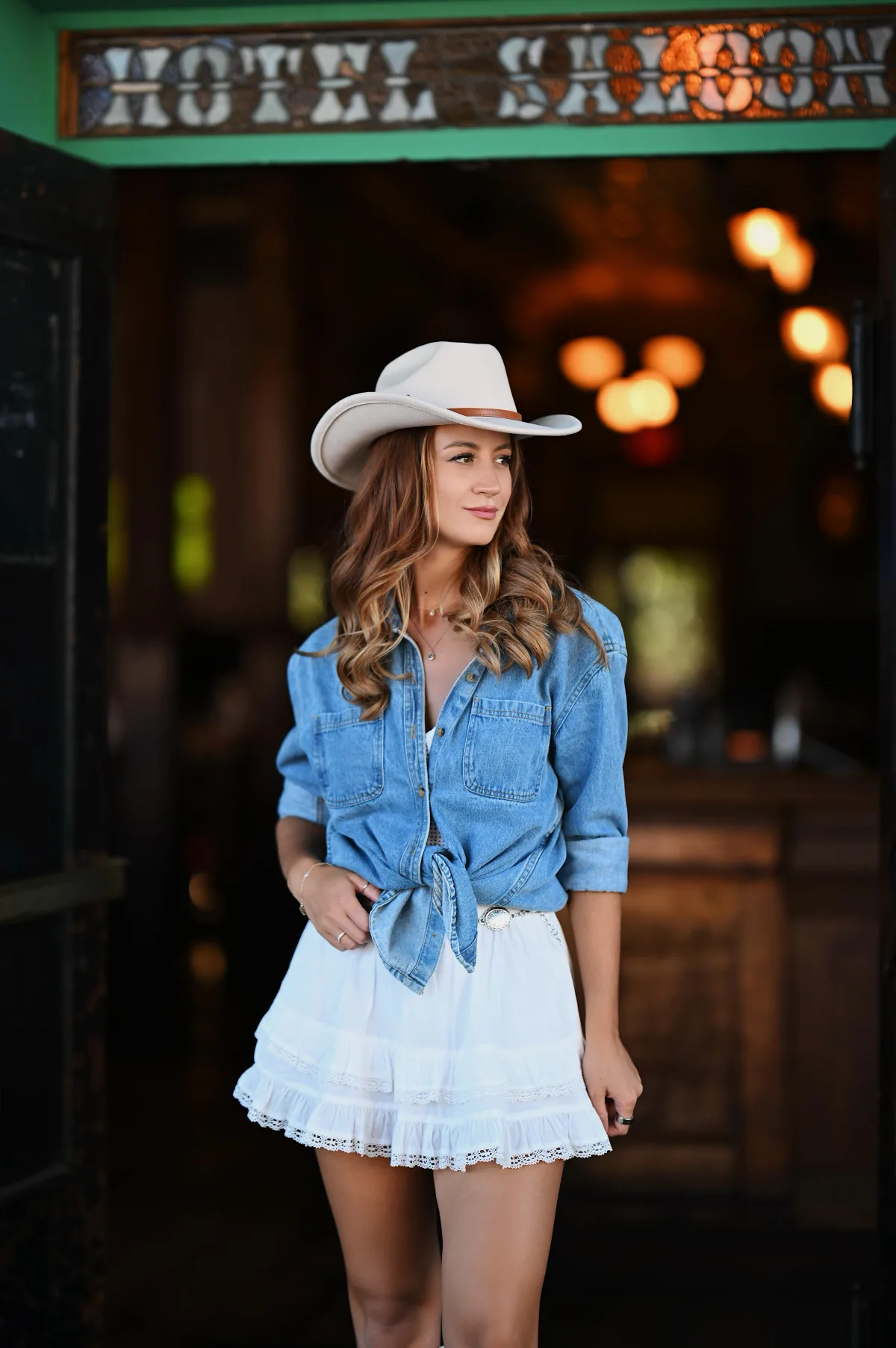
When an outfit has a clear theme, my first instinct is always to look for a location that matches it directly rather than fights it or ignores it. A Western cowgirl look and an actual saloon doorway is about as direct a pairing as you can get, so this was the obvious place to start.
The Hotel Saloon sign and the dark, warm interior behind the open doors do a lot of work here. The stained-glass lettering reads clearly even out of focus, so it's obvious where we are without needing a caption. Inside, string lights and warm tungsten bulbs blur into soft round bokeh balls — and this is where the 85mm f/1.2 S earns its price tag for me. At f/1.2, those interior lights turn into big, clean, perfectly circular discs with none of the "cat's eye" stretching you'd get toward the edges of a lesser lens. It's a subtle thing, but it's usually the difference between bokeh that looks premium and bokeh that just looks blurry.
Starting here also gave me a strong opening image for the whole set — the theme is announced immediately, and everything after this location gets to build on it instead of re-explaining it.
Brick Pillars — Texture as a Supporting Actor
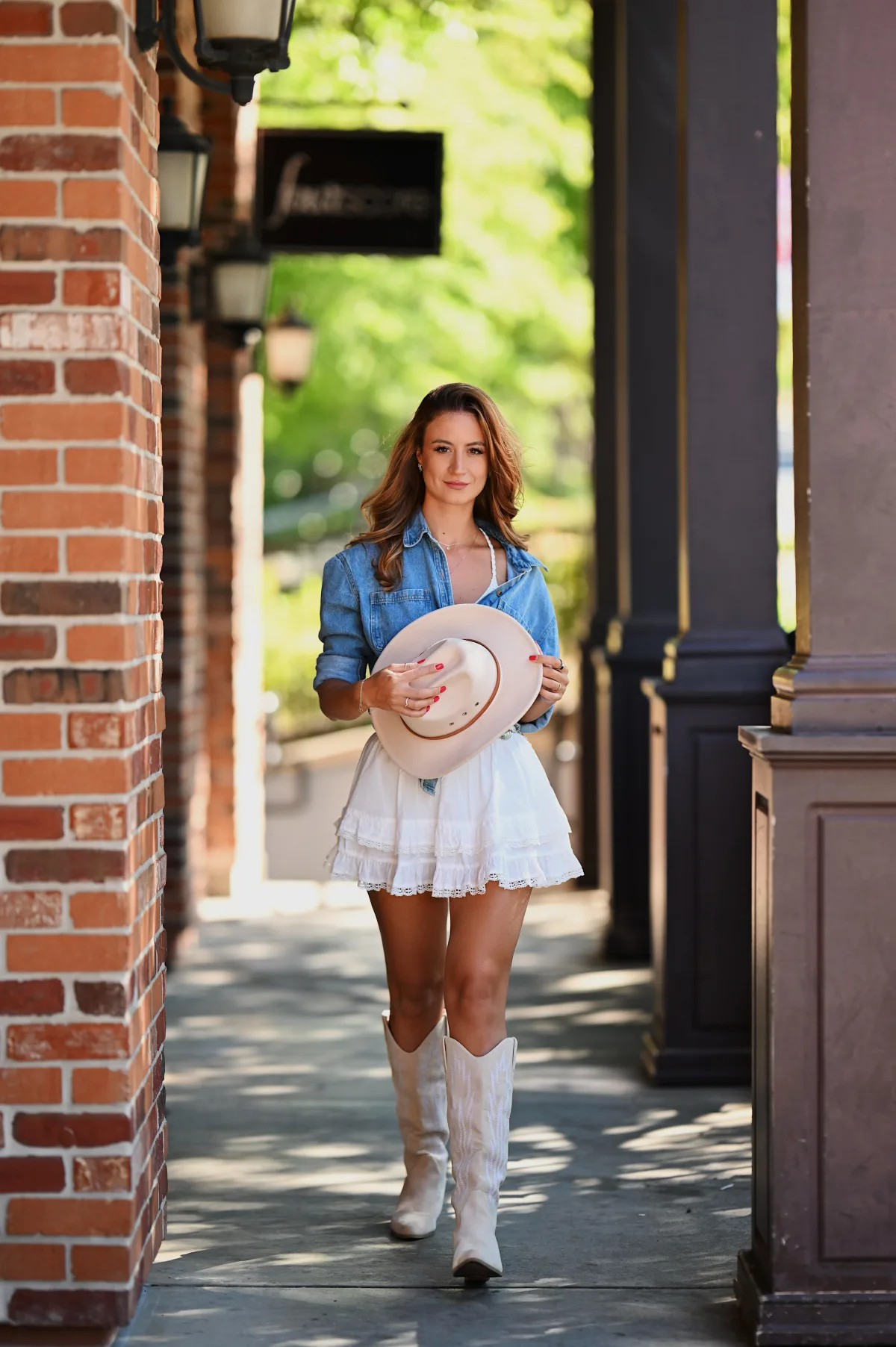
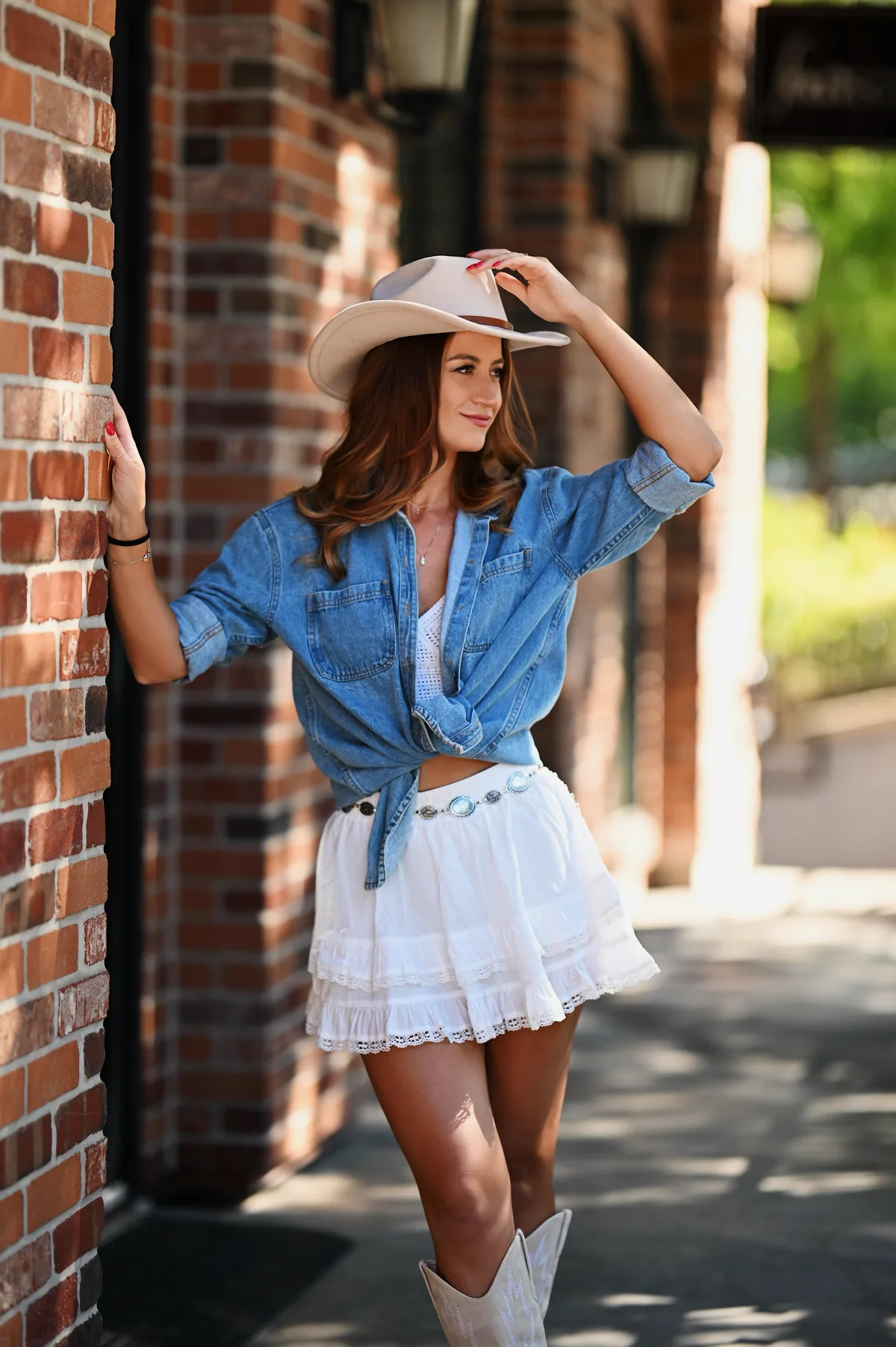
After a theme-matched location, I like to move to something that works on a different level entirely — texture instead of narrative. The covered brick walkway a block over gave us exactly that: rows of red brick pillars with a repeating rhythm, warm and rough in a way that plays nicely against soft denim and lace.
I think of this as a deliberate contrast to the saloon set. There, the background was doing thematic work. Here, it's doing textural work — the brick's rough, warm surface sits right next to her against the smooth cotton of the denim shirt and the delicate eyelet lace on the skirt, and that material contrast is a big part of what makes the eye linger. Leaning her against the pillar edges also let me use the columns as natural framing, repeating vertical lines that lead your eye straight to her.
It's a smaller, quieter location than the saloon, but that's kind of the point for me — not every background in a set needs to be making the same kind of statement.
The Shaded Walkway — Letting the Lens Do the Talking
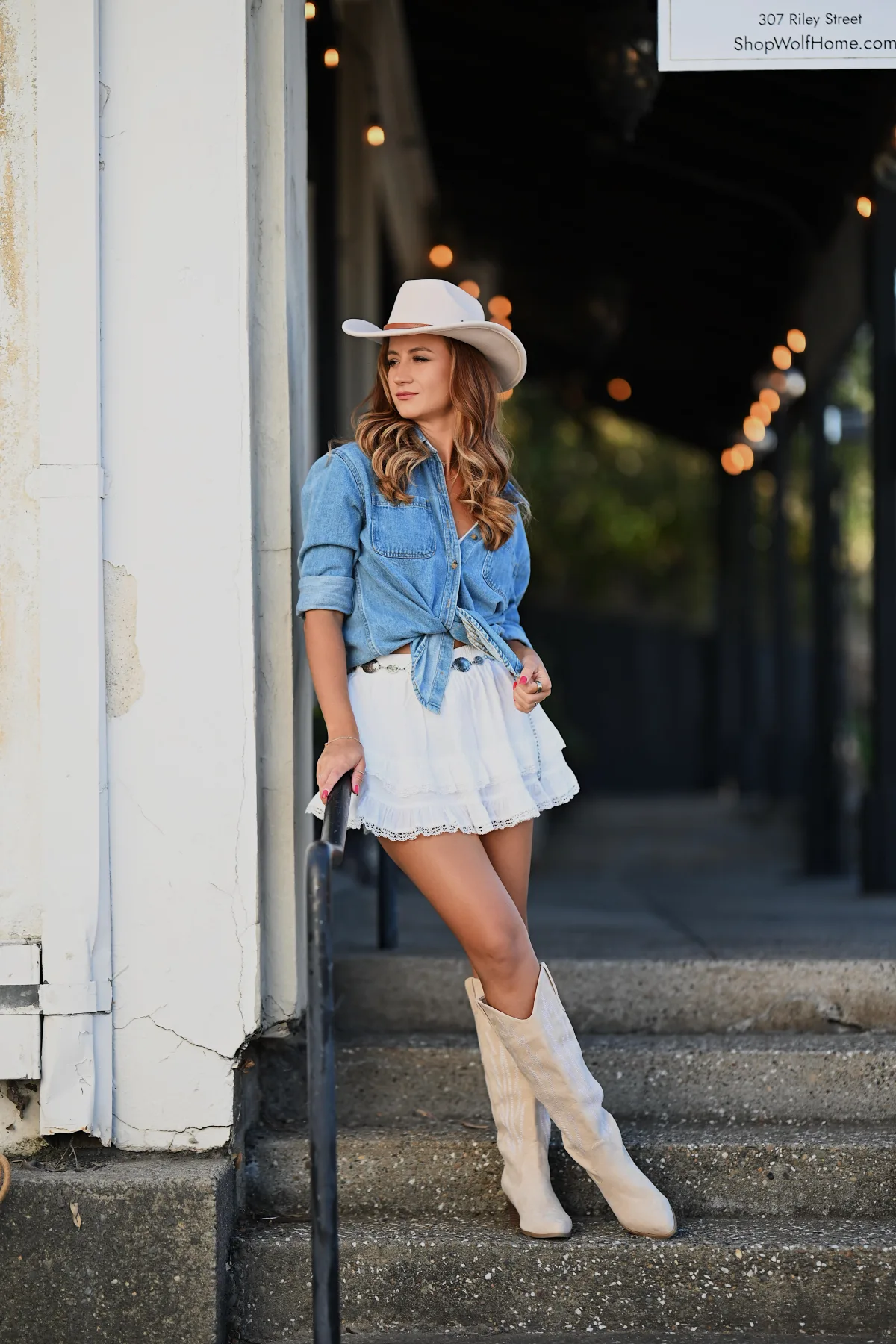
This location only gave us six frames, but it's the one I keep coming back to from this whole day.
The walkway itself is honestly pretty unremarkable — dark wooden support columns under a covered awning, with strings of café lights hanging down the row. In flat daylight I don't think this would've photographed as anything special. What changed it was deliberately underexposing the background relative to her and shooting wide open — the dark columns recede into near-black, the string lights collapse into a soft trail of warm glowing orbs receding into the distance, and she ends up being the only bright, sharp thing in the frame.
If someone asked me what f/1.2 actually buys you in practical terms, this is the set I'd show them. It's not just a shallower depth of field number on a spec sheet — it's the ability to take a background that would otherwise be dead space and turn it into a moody, glowing corridor that makes the shot feel intentional rather than like a snapshot in a parking structure.
Red Wall & Train Car — Complementary Color at Work

The last location came from a different place than the first three — color, not theme or texture. Blue and orange/red sit opposite each other on the color wheel, which makes them complementary — pairing them doesn't just avoid clashing, it actively makes both colors read as more saturated and alive next to each other. Her blue denim shirt against a deep red train car or red brick wall is that relationship playing out directly.
We tried two versions of this idea. First, a flower-covered wall with red blooms as a softer, more organic take on the same red-against-blue pairing, and then the main event — a vintage red-and-yellow train car with the light catching its metal siding. The train also gave me strong leading lines I didn't have anywhere else that day: the horizontal panel seams and the diagonal of the roof edge both pull the eye toward her rather than away, which a flat wall alone can't really offer. Wherever she posed against the train car, those lines were already doing composition work for me before I'd even thought about her pose.
Honestly, this ended up being my favorite pairing from the whole session — it's less about matching the location's literal subject to the outfit's theme and more about leaning on color relationships and letting the train's own doors, windows, and beams do compositional work.
How It All Came Together
Looking back at the day, this is roughly the order my thinking went in:
- Find the direct match first. A themed outfit deserves at least one location that says exactly what it is — the saloon doorway did that job here, and I made a point of getting it early so the rest of the set had something to build on.
- Then look for texture. A location that contrasts materially with the outfit — rough against smooth, hard against soft — keeps things visually interesting without changing the story. That's what the brick pillars gave us.
- Let light and aperture rescue a plain spot. Not every good background looks good in flat light. A fast lens and some deliberate underexposure turned a fairly boring corridor into the moodiest set of the day.
- Close on color. Complementary colors and strong architectural lines made for a confident way to end the story, and the red train delivered both.
None of this needed an exotic location — Old Town Folsom is just a few blocks of storefronts, brick walkways, and a static train display, the kind of thing a lot of towns have some version of. For me, most of the work is really just in reading what each spot can do for the outfit in front of you, not in tracking down somewhere nobody's shot before. Hopefully walking through it this way gives you a few more photoshoot location ideas to try next time you're scouting somewhere new.
Full settings and autofocus setup for this camera are in my Nikon Z5 II settings guide if you want the technical side too.
Model: @natalia_mihova
Shop the Gear
Support
Enjoyed this post?
Every review means renting or buying gear, booking models, and scouting locations. If this helped you make a gear decision, a coffee goes straight toward the next one.
Related Posts
Nikon
Nikon Z6III + Nikkor Z 50mm f/1.2 S: Fall Street Portraits with Sofia in Roseville
First shoot with the newly arrived Nikkor Z 50mm f/1.2 S on the Nikon Z6III: late afternoon fall-outfit street portraits with Sofia in a small Roseville town complex, all shot wide open at f/1.2 across nine locations, from backlit hair and string-light bokeh to long column shadows.
Nikon
Nikon Z5 II + NIKKOR Z 85mm f/1.2 S — Western Portraits in Old Town Auburn
Second round with the Nikon Z5 II, this time paired with the NIKKOR Z 85mm f/1.2 S for a western-inspired portrait session with model Nicoleta in historic Old Town Auburn, California.
Nikon
Nikon Z5 II + Nikkor Z 50mm f/1.4 — Street Portraits with Darina
A full street portrait session in downtown Sacramento with model Darina (@darina_baga) using the Nikkor Z 50mm f/1.4 on the Nikon Z5 II — loaned by @nikonusa. Five locations, three poses, and a lens that earns its place in every Z-mount shooter's bag.
Newsletter
Stay in the loop
Explore
From the Gallery